How Is It I Had Tied None of These?
6/16/20264 min read
A trap I fell into when I decided to go beyond the 5-6 flies I'd tied all my life, was not thinking about most fly tying instruction is all about the trout. And since I'd spent a significant portion of life fishing for trout it was easy to be "all in".
Sure, I was thinking at the time that trout and warm water panfish eat pretty much the same things. So, trout flies would cross over to warm water panfish. How many ties I've ruined though, digging that tiny trout fly out of a warm water's throat. I shouldn't need to tie a trout fly the rest of my life. Overstocked, in the hook size 12 to 20 range. Now, I'm trying to get a reasonable stock of warm water flies in the 8 to 14 hook size.
I've been testing my heart health using those homemade poppers for red ear and bluegill, on the low light days or low light portion of fair weather days. It's the time of year that even those ahem...year round nymphs aren't working well-at least on these warm water panfish. So, popper or other dries off...worm on. And even when the popper is hot, they get the 411 on it pretty quick, being at least a little more studious than I would like, about sipping it.
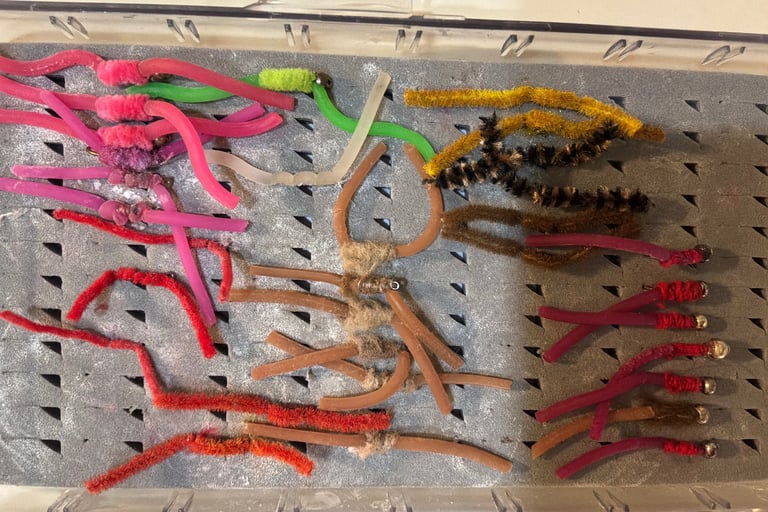
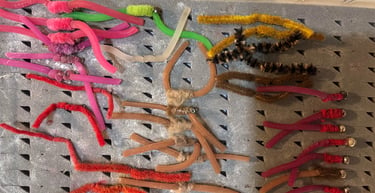
A gym teacher in Texas that I keep in touch with, and with a crappie YT channel will spend a month or so chasing mondo copper nose bluegill, in Texas. He keeps crappie fishing about as simple and limited gear and lures free, as anyone can. Bluegill-worms or crickets. Was watching his podcast the other evening when someone asked about bluegill, "...worms or crickets?" Well, I can tell you from messing with the two live offerings for a few years after I moved to the Mississippi mud, crickets make bluegill lose their minds. They often don't even seem to mind going blind on a bright day to nail a cricket on the surface, or just subsurface. A good human analogy of worms vs. crickets may be my pursuit of food. A good cajun soup, fish dish, etc., and I'm on board with sitting down and slowly taking in that good meal. Lay a chocolate bar in front of me...be holding one in your hand...get out of the way...drop it and run. I'm dangerous. Like a grizzly pursuing a beached salmon. Crickets are bluegill chocolate. Anyway, my podcast acquaintance answered "crickets". Immediately in my mind, "Why....?! Why, don't I have any crickets tied?!" Below is my worm box. Picture next to it is my cricket box. No, your eyesight is fine.
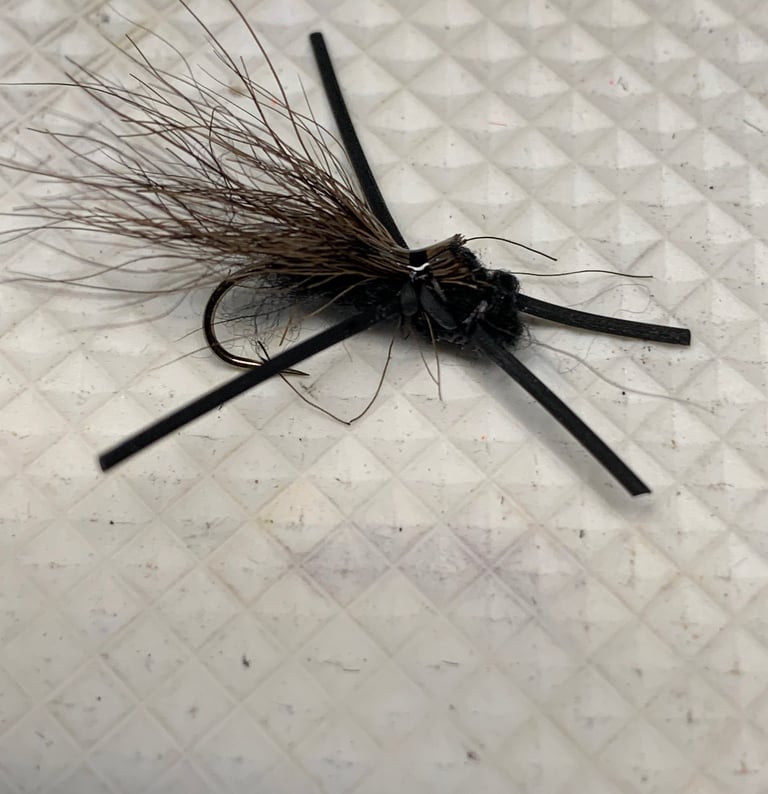
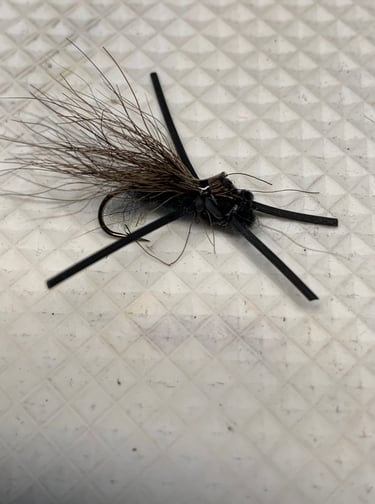
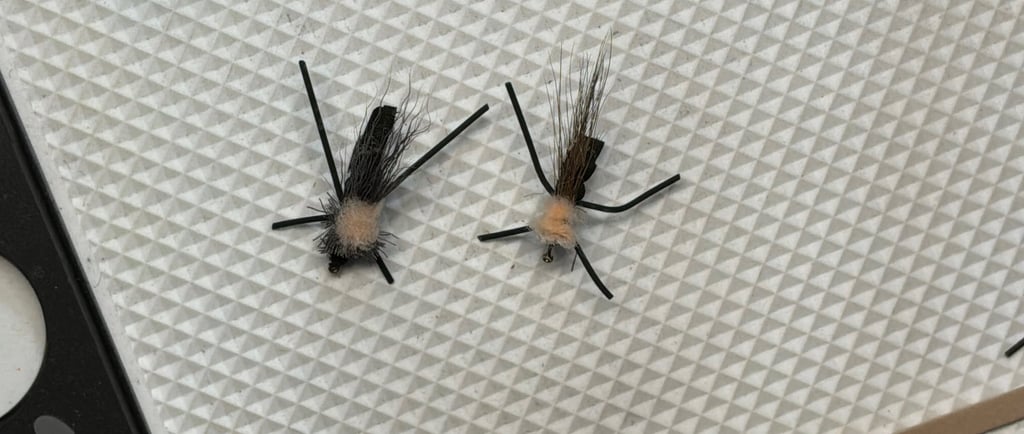
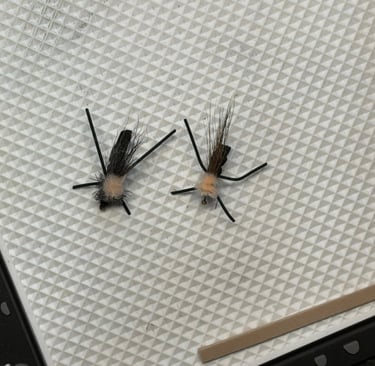
The feature picture is my first attempt at Tim Flagler's cricket. On size 10 and 12 hooks. Most tiers would go 8 and 10, but that's "my deal" with hook sizes. Tim's social media is "Tight Line Videos". I appreciate that Tim is one of the top 20 "fly fishing anything" in the country, including fly tying. He's about my age and his approach to tying most flies is simplicity. Not that he can't show off skills that make my head hurt. But he's going to always suggest "simple". "It's about the profile (of the fly)." Many will ask (I have 500 following my website!), "What's that pink hair all about? I've never seen a cricket with pink hair!" That's a sighter. I'm not big on sighters, but when learning a new fly I tie exactly as the originator. Simply put, the sighter makes it easy to see when the fly goes under. Frankly, I'm often too quick on the trigger and set the hook too fast when a sighter disappears. I watch the line. Fly and conventional fishing. The only time I use a bobber as intended is with lazy crappie-to control a lazy presentation and then easily detect a lazy "eat". Tim uses foam to tie this cricket. Foam is becoming more popular for top water/dry flies. It will-not become saturated and begin sinking. Much like my poppers, made of foam heads.
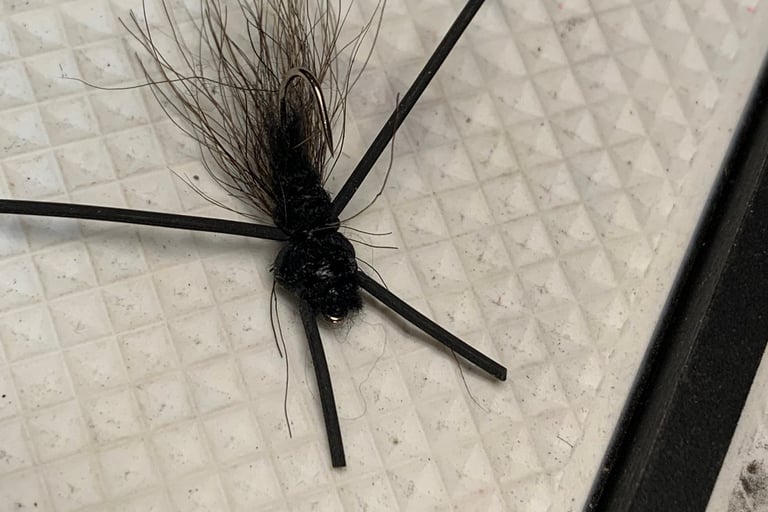
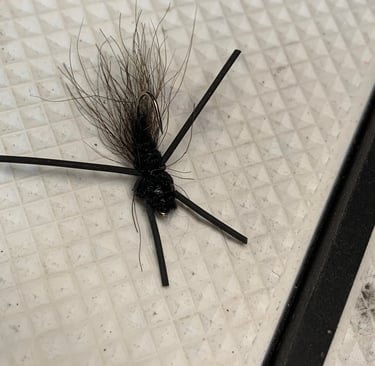
Conversely, it occurred to me after I tied a couple of the pink hairs that my experience with bluegill going ga-ga for crickets, I was crimping a split shot a short distance above the hook holding the live cricket. I was sinking them. So, possibly as close as I'll ever get to a "Rick original". I took Tim's idea and switched the foam for dubbing, after first wrapping some .15 lead around the hook. No sighter, of course. Lead and saturated dubbing-this baby'll sink. Especially important if crickets are still on the menu after the bluegill/red ear breakfast hours.
My weakness in fly tying is tapering bodies correctly, or "even segmenting with a taper". I almost nailed it (B+) on this sinking cricket. For trout, I'm a little more concerned with perfection. Not a must for trout, but they do see better than warm water panfish. Especially color. With either species though, it's all about the profile. And that taper and segmentation is "profile".
We (me and my foam or dubbed crickets) leave before sunrise, in the morning. And before the wind is blowing 40+ mph. By luck, I had chosen tomorrow's fishing on a lake that my two major bluegill and red ear spots are protected longer from a southwest wind. Haven't fished that lake this year the way I (lived on it ) for several years. If those fish have relocated well...time to display my skills. And if the wind begins coiling fly line around my neck like a constrictor snake...go home.